


Minneapolis packs big art, deep river history, lake days, and one seriously messy burger into a compact city. We’ve picked the stops that give you the clearest feel for the place, with notes for families, business guests, outdoor fans, and anyone here for a short stay.
A list of eight restaurants leaves out key details such as neighborhood, price, and visit timing. Our list goes wider, so you can build a day that actually works.
1. Walker Art Center and Minneapolis Sculpture Garden – See the Spoonbridge and Cherry
For first-time visitors, the Walker Art Center and Minneapolis Sculpture Garden are among the best things to do in Minneapolis. The garden suits families, couples, photographers, and anyone who wants a free outdoor stop near downtown.
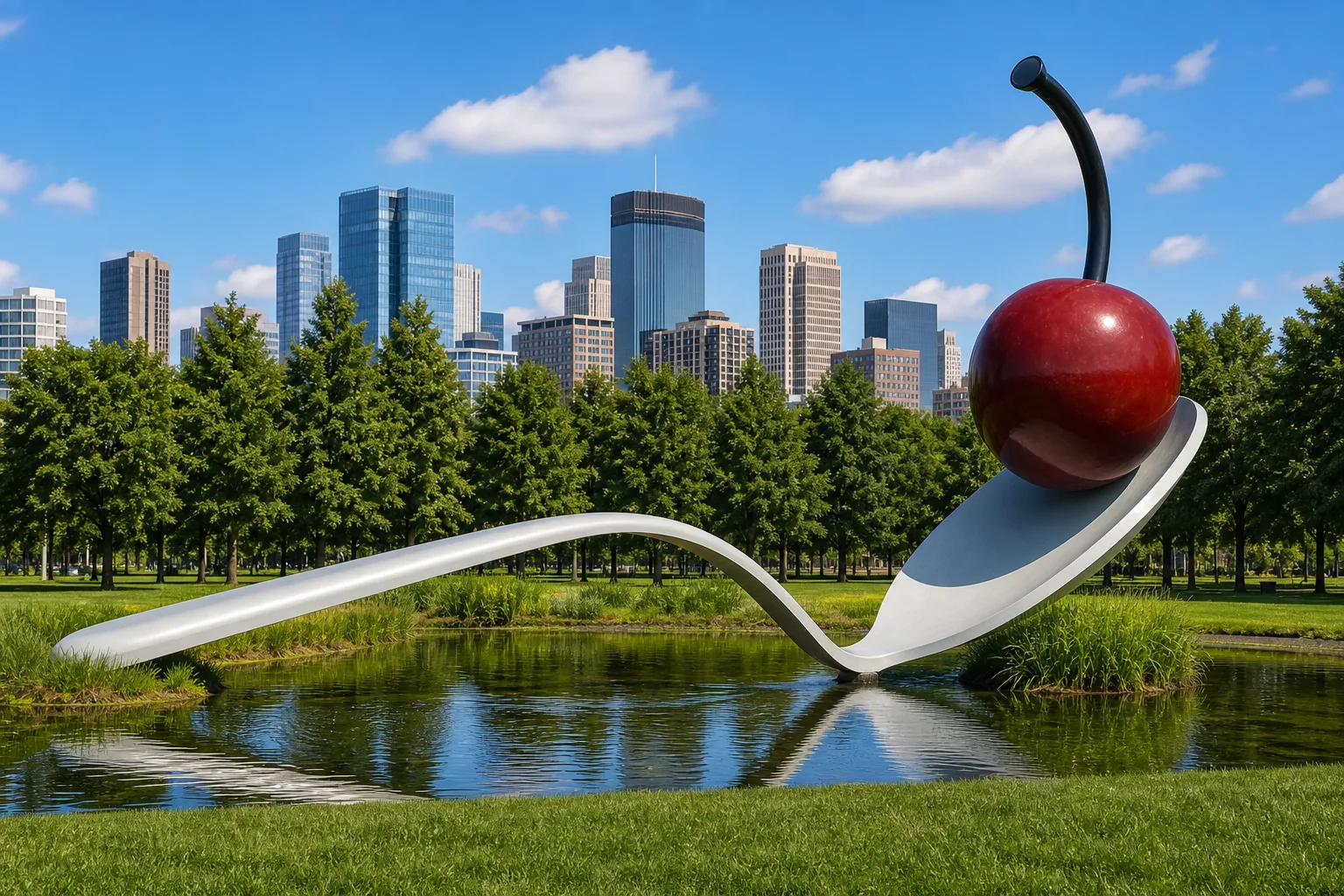
The garden is open daily from 6 a.m. to midnight, all year, and admission is free. Its 11 acres hold more than 60 outdoor sculptures. The famous Spoonbridge and Cherry is the photo most visitors expect, but the wider garden rewards a slower walk.
We like this stop because it gives you art without asking for a full museum block. You can follow a self-guided tour on your phone, pause beside a sculpture, then cross toward Loring Park. The Walker itself adds indoor galleries with painting, sculpture, film, performance, and new media.
The garden’s design also has a useful local detail. A large underground cistern helps collect stormwater, and the site’s water system keeps more than 4 million gallons of runoff out of storm sewers each year. That detail is easy to miss while taking photos, but it shows how the park blends art with land care.
The outdoor garden is free. Walker gallery admission and hours can change, so check the museum before you plan a timed visit. For a date, a family outing, or a quiet break between meetings, this is our easiest recommendation.
2. Stone Arch Bridge and Mississippi Riverfront Trails – Walk through Minneapolis history
Stone Arch Bridge is the right pick when you want history, views, and movement in one of your Minneapolis outings. It works well for couples, families with older children, walkers, and guests who want a scenic route without leaving the city center.

The former railroad bridge crosses the Mississippi and is closed to cars, which makes the crossing much more relaxed on foot or by bike. From the bridge, you can look toward downtown, the old mill district, St. Anthony Falls, and the river corridor that helped shape Minneapolis.
Start near the Guthrie Theater or Mill City Museum, then walk across the bridge toward St. Anthony Main. On the east side, cobblestone streets lead toward nearby riverfront parks. Those nearby paths give you different angles on the bridge and the falls.
The riverfront is especially good for visitors who dislike fixed schedules. You can make a short photo stop or turn the walk into a longer loop. The Stone Arch route also connects naturally with Mill Ruins Park, local weekend activities, and other historic sites along the water.
The bridge is a popular place, so use care around bikes and narrow sections. Weather can change the feel of the riverfront quickly. In warm weather, bring water. In cold weather, wear shoes with good grip.
Stone Arch Bridge is also unusual in a way that helps explain its appeal.
Give yourself at least an hour for the bridge and nearby viewpoints. Give yourself half a day if you plan to add the museum district or a meal near St. Anthony Main.
3. Chain of Lakes and Minnehaha Falls – Bike, walk, and enjoy the water
The Chain of Lakes is one of the strongest outdoor choices among things to do in Minneapolis. It suits active travelers, families, casual walkers, and business guests who need fresh air after a long day indoors.
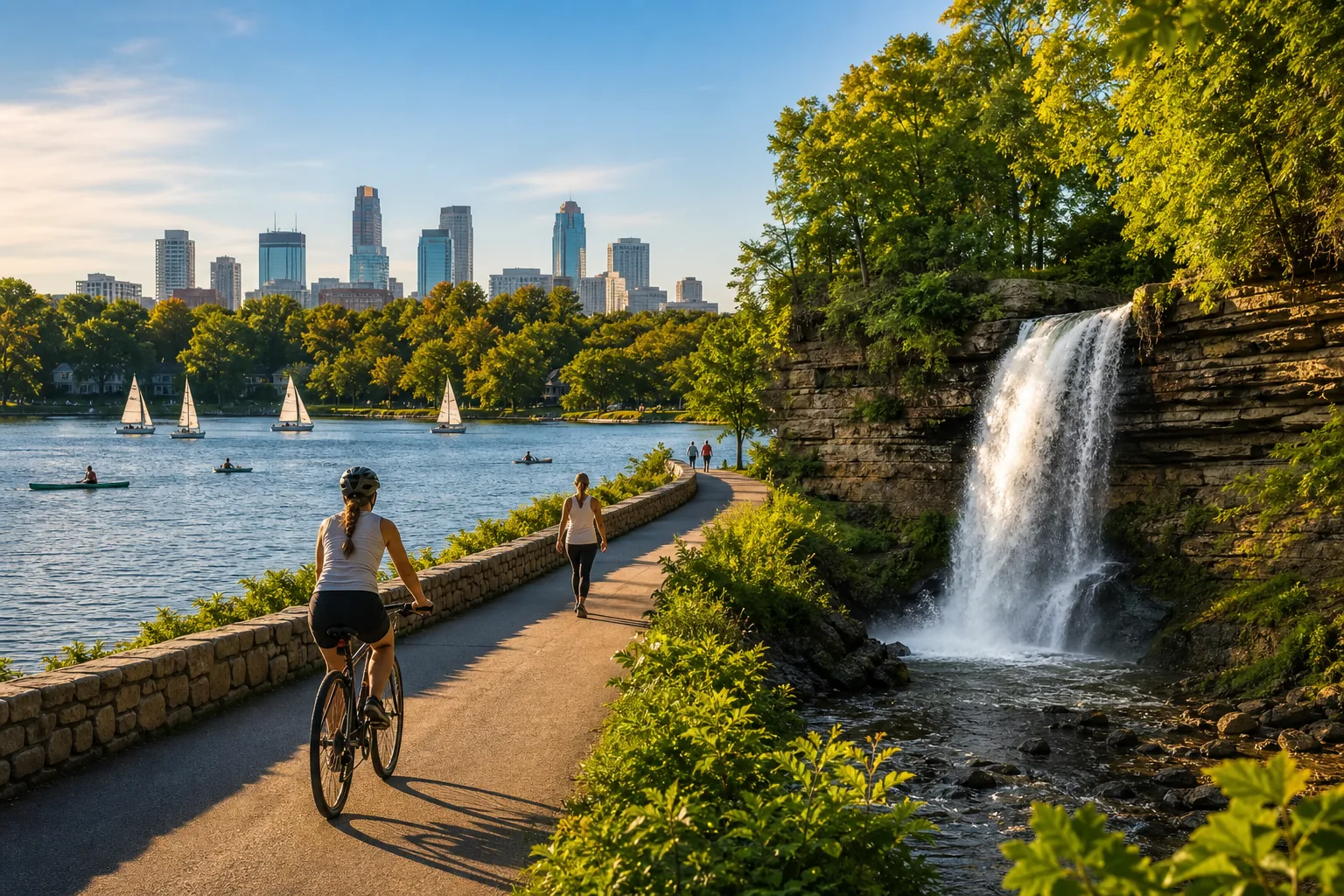
The park area includes Cedar Lake, Lake of the Isles, Bde Maka Ska, and Lake Harriet. Together, the lakes give you changing views without a long drive. One stretch may show the skyline. The next may pass trees, beaches, playgrounds, or large homes.
Nearly 15 miles of walking and biking trails run through the lake area. Visitors can walk, bike, swim, kayak, or spend time near the water. Many bike paths work one way, so check the direction before setting out. That layout keeps bikes moving, but it can limit your route choices.
Lake Harriet works well for a slower afternoon. The lakefront has an amphitheater with free summer concerts, plus places to stop for food. Families can build their own plan around a beach, playground, and short walk instead of trying to circle every lake.
Minnehaha Falls adds a second outdoor highlight. The 53-foot waterfall sits inside Minnehaha Park, which has nature paths, picnic areas, bike routes, and disc golf. The falls change with the season. Spring brings strong water flow, while winter can turn the falls into a wall of ice.
We recommend seeing the falls on the same day as the lakes only if you have enough time. They are connected to the wider city trail network, but rushing between every outdoor stop can make the day feel like a checklist.
If your group wants a guided ride or a planned tasting stop after the parks, our Minneapolis city tour options can help you compare private chauffeur rides with other tour formats.
4. Minneapolis Institute of Art – Explore world-class collections for free
The Minneapolis Institute of Art is the best museum choice for visitors who want a broad collection without an admission charge. It works for families, solo travelers, rainy afternoons, and business guests with a few open hours.
The museum is free year-round and holds artworks spanning more than 5,000 years of world history. The collection includes work from Africa, Asia, the Americas, and other regions. You can move through decorative arts, textiles, sculpture, paintings, drawings, and photography in one visit.
That range is the main reason to choose the museum over a smaller gallery. A first visit can focus on one area, such as Asian art or American design. A return visit can take a different path without feeling repetitive.
Families should look for child-focused programs. The museum also has a café, which makes it easier to pause instead of trying to see every room at once. Large museums can become tiring fast. Two focused hours often beat a rushed full-day visit.
The museum is in the Phillips neighborhood at 2400 Third Avenue South. Check current hours before you go because Minneapolis museums may close on Mondays or Tuesdays. The museum is accessible, and nearby parking options make it workable for many visitors with mobility needs.
Admission is the best part of the plan, but special events may have their own rules. If you’re traveling with a group, check ahead so everyone knows where to meet.
5. Downtown indoor routes and Foshay Tower – Experience the city above street level
Downtown indoor routes and Foshay Tower give you a different view of Minneapolis. Choose them when weather is poor, when you’re staying downtown, or when you want architecture without a long outdoor walk.
Indoor downtown routes link many buildings above street level. Travelers can move through offices, shops, food spots, and hotels while avoiding much of the heat, cold, wind, or snow below. Hours vary by building and day, so don’t assume every passage stays open late.
The IDS Center is a useful place to understand downtown connections because several routes meet there. From that hub, you can explore downtown architecture and make your way toward Nicollet Mall, public library services, or nearby cultural venues.
Foshay Tower adds history and height. The tower was once Minnesota’s tallest building and now has an observation deck, a small museum, and Prohibition Bar on its upper floors. The observation deck’s hours and access can change. Check before you go.
The tower is a good short stop before dinner or a show. The view helps you place the river, downtown blocks, and surrounding neighborhoods. It also gives guests a simple indoor plan when a lake walk is out of the question.
For corporate groups, timing matters more than distance. Indoor route access can change outside business hours, so build a street-level backup into the plan. We can help guests move between airport, hotel, dinner, and event stops through Minneapolis Airport Car Service when the schedule needs one coordinated ride.
6. Mill City Museum and Historic Mill District – Discover the river’s industrial past
Mill City Museum is the right stop for visitors who want the story behind Minneapolis. It suits history fans, families with school-age children, and anyone already walking near Stone Arch Bridge.
The museum sits inside the remains of a former flour mill beside the Mississippi. The river powered mill turbines, while wheat from nearby farms fed a flour industry that helped build the city. The ruins still shape the riverfront skyline.
Pair the museum with Mill Ruins Park and Stone Arch Bridge. That order works well because you learn the industrial story first, then see the river structures and old mill remains outside. You can also add a Saturday morning market stop when it fits your schedule.
The museum often has history programs, exhibits, and tours. Check the schedule before visiting if you want more than a self-guided look. The site also has city views and a gift shop, so it can fill a longer block without adding another neighborhood.
The mill district is a strong choice for visitors who ask why Minneapolis grew where it did. The answer is visible in the water, the falls, the bridge, and the surviving walls. You don’t need a long lecture to understand the connection.
Allow extra time for outdoor photos. The riverfront is more than a museum entrance, and the best views come from walking around the district.
7. Mall of America – Shop, dine, and find indoor entertainment
Mall of America is the easy answer for indoor entertainment near Minneapolis. It works for families, shoppers, travelers with a long airport layover, and groups that need a weather-proof plan.

The four-level complex has about 520 shops and 50 restaurants, along with an indoor theme park, aquarium, mini golf, escape room, and other attractions. That mix means different people in the same group can split up without leaving the building.
The mall is just south of Minneapolis-Saint Paul International Airport. Lockers in different sizes can make a pre-flight visit easier, though you should check current rules and availability. Leave enough time for airport security rather than treating the mall as a last-minute stop.
Families should plan the main activity before arriving. A mall this large can eat up time through simple walking. Decide whether the day centers on rides, shopping, the aquarium, or a meal, then add extras if the schedule allows.
Business groups can also use Mall of America as a casual indoor outing after a meeting. It is less intimate than a neighborhood restaurant or museum, but it gives a mixed group plenty of choice.
Check attraction hours separately from mall hours. Individual venues may open later, close earlier, or require their own tickets.
8. Target Field and U.S. Bank Stadium – Add a major sports experience
Target Field and U.S. Bank Stadium are strong picks when sports belong on your Minneapolis itinerary. Choose a venue based on the event calendar, your group’s age range, and whether you want an outdoor baseball day or an indoor stadium experience.
Target Field sits in the Warehouse District downtown. A Twins game can anchor an entire evening because the area around the ballpark has places for food, drinks, and pre-game meetups. The stadium plaza has photo spots, Twins history displays, and a team store for visitors who arrive early.
Families can use the plaza as a low-pressure start before entering the ballpark. Fans can also book stadium tours on game days or non-game days, subject to the current schedule. Inside, social spaces spread across the park, giving groups places to gather beyond their seats.
For a pre-game plan, leave room for transit and security. Check local transit information for game-day transportation needs. Downtown traffic can slow near major events, especially when several venues have activity at once.
U.S. Bank Stadium gives you an indoor option for concerts, football, and other large events. The experience changes with the event, so check the official calendar rather than planning around a generic stadium tour.
Sports nights are also where a chauffeur can save effort. Minneapolis Airport Car Service can help coordinate airport pickup, hotel transfers, and event drop-off when a group has bags or a fixed start time. Book around the event schedule, not only the first pitch or show time.
Target Field is best for a warm-weather baseball mood. U.S. Bank Stadium is the safer choice when you want shelter or a different event format.
9. University of Minnesota and Orfield Laboratories – Try distinctive campus and science experiences
The University of Minnesota and Orfield Laboratories add unusual depth to a Minneapolis visit. These options suit curious adults, prospective students, design fans, and travelers who have already seen the main downtown sights.
The University campus gives visitors a student-day view of the city. Walk the river area, look at the mix of academic buildings, and check for campus tours or public programs before you arrive. The University’s river setting also connects with paths beside the Mississippi.
Orfield Laboratories is known for its extreme quiet and is often described as the world’s quietest place. That makes it a memorable contrast to stadium noise, downtown traffic, and busy museums. Access is not the same as visiting a public park, so confirm tour availability before building your day around it.
These stops work best with advance planning. Campus events can shape access, while laboratory visits may depend on a scheduled experience. Keep them as a focused half-day rather than trying to squeeze them between several timed attractions.
For students and science-minded guests, this pair gives Minneapolis a side that standard sightseeing lists miss.
10. Uptown, Eat Street, and Northeast Minneapolis – Taste the city’s diverse neighborhoods
Neighborhood food stops are among the most personal things to do in Minneapolis. Uptown, Eat Street, and Northeast Minneapolis each give you a different way to spend an evening, especially when you want local flavor instead of another formal attraction.
Eat Street is a useful base for a meal because the corridor reflects Minneapolis’s many immigrant communities. Look for Somali food along with other cuisines from across the city. A cultural museum is another choice when you want context beyond the dining table.
Uptown works for a more social evening with shops, bars, music references, and nearby parks. Northeast Minneapolis brings galleries, studios, and a strong arts district. Local arts spaces can offer artist studios and small businesses in former commercial complexes, with open events at set times.
Minneapolis also has a food item visitors should try at least once: the Juicy Lucy. It is a burger with cheese inside the patty, so let it rest before the first bite. The filling can be extremely hot.
| Area | Best fit | Plan around |
|---|---|---|
| Uptown | Evening walks, shops, and casual nightlife | Weather and event crowds |
| Eat Street | Global food and cultural stops | Restaurant hours and group preferences |
| Northeast Minneapolis | Galleries, studios, and local art | Open studio dates and walking time |
That gap matters when you’re planning a group meal. Check the address, hours, and booking rules before sending guests across town.
FAQ
What are the best free things to do in Minneapolis?
The best free options include the Minneapolis Sculpture Garden, the Minneapolis Institute of Art, and walks across Stone Arch Bridge. The sculpture garden is open daily from 6 a.m. to midnight, while the art museum offers free admission year-round. Riverfront parks and lake trails also let you build a full day without paying for every stop.
What should I do in Minneapolis if I only have one day?
Start with the Sculpture Garden, then walk toward downtown and the Mississippi Riverfront. Add Mill City Museum or the art museum based on your interest, and finish with a neighborhood meal or a Juicy Lucy. If weather is poor, replace the outdoor walk with indoor downtown routes, Foshay Tower, and Mall of America.
What are the best outdoor activities in Minneapolis?
The Chain of Lakes, Minnehaha Falls, Stone Arch Bridge, and Mississippi riverfront trails are the strongest outdoor picks. You can bike or walk around the lakes, pause at beaches, and visit the waterfall in Minnehaha Park. Seasonal conditions matter, so wear shoes suited to the forecast.
Is Minneapolis good for families?
Minneapolis is good for families because it combines free museums, open parks, easy photo stops, and indoor attractions. The Sculpture Garden, the art museum, Minnehaha Park, and Mall of America give families different energy levels in one trip. Plan shorter museum blocks and add time for snacks or rest.
How should I get around Minneapolis for sightseeing?
You can walk many downtown routes, use trails around the lakes, and check transit for major events. A chauffeur is useful when your group has luggage, several timed stops, or a flight to catch. Minneapolis Airport Car Service can coordinate airport transfers and private city travel when you want the day to stay smooth and predictable.
Conclusion
For a first visit, combine the Sculpture Garden with Stone Arch Bridge, then choose either the lakes or a museum based on the weather. Keep dinner in a neighborhood that matches your group, and plan transport before a game or airport run. When you want one vehicle and a clear schedule, explore our Minneapolis chauffeur service options and let us handle the road while you enjoy the city.


