


A full stadium can turn a short Minneapolis trip into a timing problem. Traffic builds, parking fills, and groups split up when plans stay vague. We use a five-step process to keep sporting event transportation smooth, safe, and enjoyable, whether you’re moving a small executive group or a full fan club.
Step 1: Define Your Sporting Event Transportation Needs
Start by writing down what your sporting event transportation plan must accomplish. A ride for four guests has very different needs from a team trip with equipment or a company outing with several pickup points.
Record the event date, start time, venue, guest count, luggage or gear, and return plan. Then mark each guest’s pickup area. A group spread across Minneapolis, Edina, Bloomington, and St. Paul may need a planned loop instead of one central meeting point.
For executive guests, a sedan or SUV may fit the tone of the event. A van can work better when the group needs to stay together. If you need help with business travel around the game, our corporate event transportation services provide a useful starting point for matching the trip to the right vehicle and schedule.
Separate the trip into three movements:
- Pickup from homes, hotels, offices, or the airport.
- Arrival at the venue before the crowd peaks.
- Post-game departure with a fixed meeting point.
Don’t plan only for the ride to the stadium. The return trip is often harder. Guests leave at once, rideshare demand rises, and curb space can change. Set a pickup point that everyone can find without crossing busy streets.
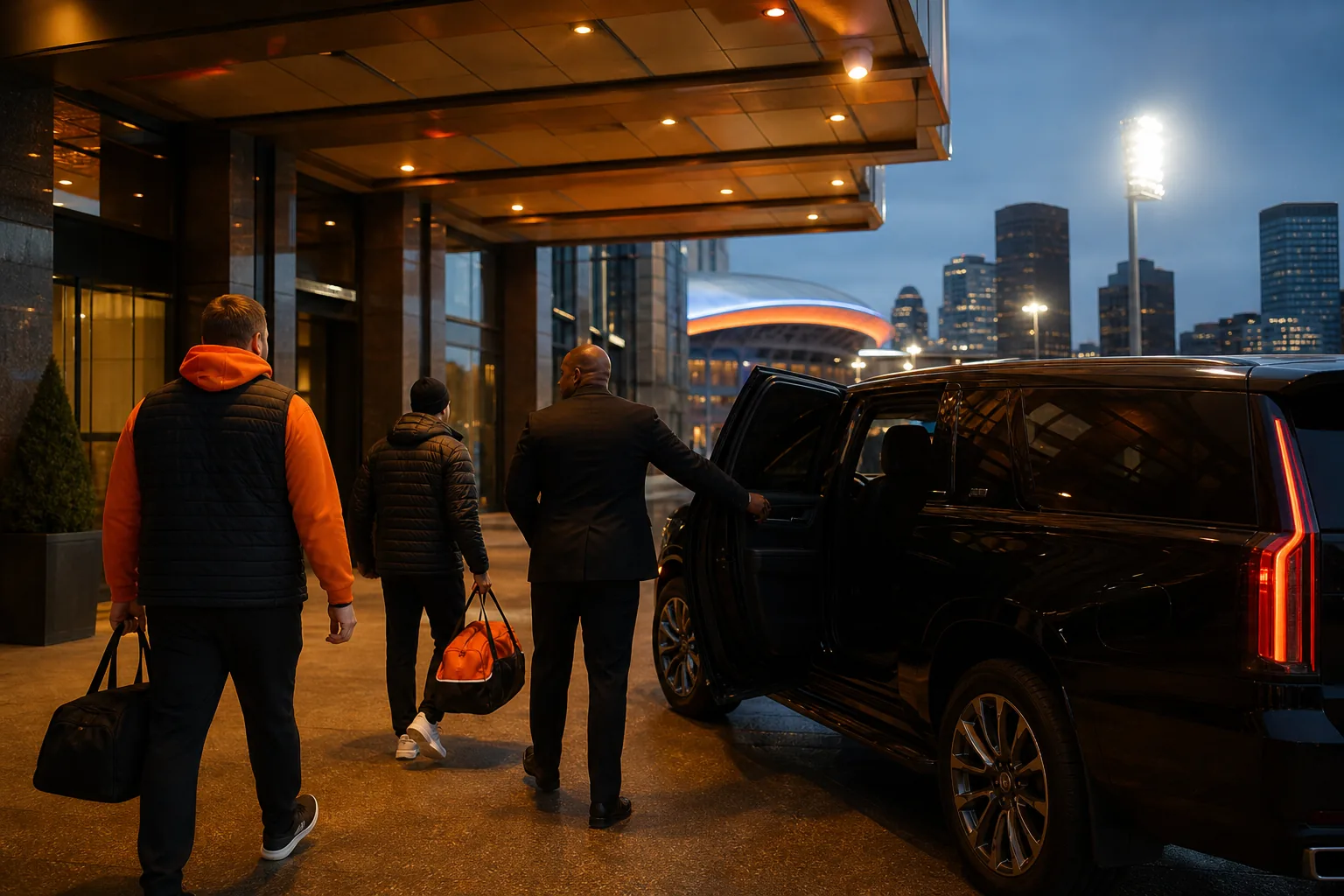
Step 2: Map Pickup Routes, Venues, and Arrival Times
Good sporting event transportation starts with a route that allows room for traffic and guest delays. Map every pickup point before you choose an arrival time.
Use the venue’s official address, not a general neighborhood name. Downtown stadiums may have different commercial drop-off areas from private cars. A coach or large van may need a specific approach road, while a sedan can use a standard passenger curb.
Build the schedule backward from the time guests should reach their seats. Add time for the final walk from the curb, security screening, ticket checks, and a late passenger. For a high-demand game, arriving at the venue shortly before kickoff creates needless pressure. A better plan gives guests time to enter without rushing.
Mark these points on your route sheet:
- Each pickup address and the guest assigned to it.
- The planned loading time at every stop.
- The venue drop-off zone and driver approach.
- The post-game meeting point.
- A backup location if the main curb is closed.
Traffic conditions can change because of crashes, construction, weather, or road closures. State transportation agencies publish road condition updates for these types of disruptions. The transportation updates show the kind of live road information planners should check before departure, even when the trip is in another metro area.
For a Minneapolis event, check the route again on game day. A route that looks short on a map may slow down near a full parking ramp or a closed downtown street. Give the chauffeur the full plan, including any stop where guests may need extra loading time.
We also suggest a simple rule: one person owns the schedule. That person receives guest updates and sends changes to the provider. When five people make route edits at once, small changes can become missed pickups.
Step 3: Choose Vehicles and Coordinate the Schedule
The right vehicle makes sporting event transportation easier to manage because the group stays together. Choose based on passenger count, luggage, comfort, and the access limits near the venue.
For a small group, a luxury sedan gives guests a quiet ride with a polished feel. An SUV adds room for coats, bags, and event gear. A van works when guests need one shared ride but don’t need a full-size coach.
Don’t book a vehicle by seat count alone. Ask how much usable space remains when people bring backpacks, coolers, garment bags, or sports equipment. A team trip may need more room than the passenger count suggests.
Set the schedule in blocks rather than vague promises. For example, write “pickup at 4:15 p.m.,” not “late afternoon.” Give the provider a clear arrival window and a firm departure plan. If the game may go into overtime, decide in advance how the waiting period will work.
Coordinate these details with the chauffeur or dispatch team:
- The lead guest’s name and preferred contact method.
- The exact loading side at each pickup.
- Guest access needs or mobility concerns.
- The amount of gear in the vehicle.
- The time the driver should remain after the event.
Technology can reduce guesswork.
Minneapolis Airport Car Service brings that same focus on timing to chauffeured travel. Its service is built around qualified chauffeurs, a luxury fleet, and real-time GPS tracking, so a planner can see where the vehicle is instead of waiting for a vague update.
For multi-vehicle trips, assign each vehicle a simple name such as “Hotel Loop A” or “Executive Group.” Keep the names in the guest message and the dispatch sheet. Clear labels prevent guests from boarding the wrong vehicle after a crowded game.
Step 4: Confirm the Provider, Pricing, and Service Details
Before you book sporting event transportation, get the full service plan in writing. A low starting rate means little if waiting time, extra stops, or a changed pickup adds cost later.
Ask for a quote that shows the pricing structure. Minneapolis providers may use flat-rate, point-to-point, hourly, or distance-based pricing. For a game with several pickups, an all-inclusive distance-based rate can make the budget easier to read because the route is priced as a whole.
Minneapolis Airport Car Service uses competitive, all-inclusive distance-based rates with no hidden fees, . That format can help when a corporate planner needs to approve a route with more than one stop.
Request written answers to these questions:
- Is the quote for one vehicle or the full group?
- Are extra stops included?
- How is waiting time handled after the game?
- What happens if the venue changes its loading area?
- Can the provider share real-time GPS updates?
- Who handles dispatch on event day?
- What is the cancellation and change policy?
Then confirm the vehicle class. “Luxury vehicle” can mean different things to different providers. Ask for the passenger limit, luggage space, and vehicle type in the reservation record. Don’t rely on a stock photo or a broad fleet label.
Review the chauffeur plan as well. Qualified chauffeurs should receive the full route, guest notes, venue details, and the return procedure before the trip begins. This handoff matters when a driver needs to adjust for a blocked curb or a late guest.

We recommend comparing the total plan, not only the first number on the quote. A provider with flat-rate pricing may look simple, while a multi-stop trip still needs clear answers about added time. The best choice is the one whose price matches the route you will actually use.
Step 5: Share Instructions and Manage Event-Day Changes
Clear guest instructions turn sporting event transportation into a shared plan. Send one message with the pickup time, meeting point, vehicle description, driver details, venue entrance, and return instructions.
Keep the message short enough to read on a phone. Put the most important facts first. Tell guests when they must be ready, not when the vehicle is expected to arrive. A five-minute loading buffer can protect the full route when one person needs extra time.
Use one event lead for all changes. Guests should send delays or location changes to that person. The event lead then contacts dispatch, which prevents several guests from giving conflicting instructions to the chauffeur.
Prepare three backup plans before departure:
- A second pickup spot near the main location.
- A meeting point away from the busiest curb after the game.
- A late guest rule that protects the rest of the group.
Road conditions can shift during a large event. Official transportation agencies publish updates about construction, incidents, closures, and weather-related travel issues. Those updates are a useful reminder to check the route again before the first pickup, rather than treating the morning plan as final.
Real-time GPS tracking adds a useful layer of control. If the vehicle is delayed, the event lead can see the current position and send a truthful update. If guests are waiting at the wrong curb, the lead can correct the meeting point before the vehicle arrives.
After the event, record what changed. Note the actual pickup times, curb issues, guest delays, and any route that worked well. This short review improves the next booking and gives your provider better information for a repeat event.
Minneapolis Airport Car Service can help planners keep the process organized through qualified chauffeurs, luxury vehicles, and real-time updates. We aim to make luxury meet reliability, with a smooth handoff from the first pickup to the final drop-off.
FAQ
How early should I book sporting event transportation?
Book sporting event transportation as soon as you know the event date, guest count, and venue. Popular games can create tight vehicle supply and heavy downtown traffic. Early booking gives you more time to confirm the vehicle class, route, waiting terms, and backup pickup point. For corporate groups, early planning also makes internal approval easier.
What vehicle is best for a sporting event?
The best vehicle depends on group size, gear, and pickup access. A sedan suits a small executive group, while an SUV adds room for bags. A van can keep a larger group together without using several cars. Ask about usable luggage space instead of choosing by passenger count alone.
How do I plan transportation after a game?
Plan the return ride before the event begins. Choose one meeting point, share it with every guest, and set a clear departure window. Avoid relying on a busy curb directly outside the venue. Sporting event transportation works better when the group knows where to walk after the crowd leaves.
Does real-time GPS help with event transportation?
Real-time GPS helps the event lead see a vehicle’s current location and share a more accurate update. It can also expose a wrong curb or a route delay before guests wait too long. GPS won’t remove traffic, but it gives the planner better information for fast decisions.
What should I ask a Minneapolis transportation provider?
Ask about vehicle capacity, luggage space, pickup access, extra stops, waiting time, cancellation terms, and event-day dispatch. Also ask whether the quote is all-inclusive and whether real-time updates are available. Minneapolis Airport Car Service can review these details with you before booking so the final plan matches the trip.
Conclusion
Choose a provider that can match the vehicle to your group, price the full route clearly, and keep you informed when traffic changes. Start by writing your guest list and pickup map, then send those details to Minneapolis Airport Car Service for a tailored transportation plan. We’ll take care of the road while you focus on the event.


