


Most party buses hold between 14 and 56 passengers, but the biggest number on the listing isn’t always the best fit. In the Twin Cities, a large charter bus can cost only modestly more per hour than a small Sprinter limo. We’ll show you how to size your group, leave room to move, and confirm the exact vehicle before booking.
We compared hourly rate listings across three Minneapolis party bus marketplaces, price4limo.com, partybus-rental.net, and partybuses.net, covering 32 vehicle capacity tiers from 8 to 56 passengers. On price4limo.com, weekday rates ran from $165 for a 10-passenger bus to $265 for a 50-passenger bus, a 5 times capacity jump for only a 1.6 times price increase. On partybus-rental.net, the 14-passenger Sprinter limo listed at $204 weekday, just $2 below the $206 weekday low for a 40 to 56-passenger charter bus. Across all three sites, larger buses cost only modestly more per hour than small Sprinter limos, backing the case for sizing up rather than squeezing a group into a tight one.
Step 1: Estimate Your Group’s Required Capacity
The first step in figuring out how many people fit in a party bus is to count confirmed riders, not invitees. Start with the people who have said yes. Then add room for the way your group will use the bus.
A 20-passenger bus may technically carry 20 people. That doesn’t mean 20 guests will feel comfortable during a four-hour night out. People stand up, change seats, reach for drinks, take photos, and move through the aisle. A bus filled to its legal limit can feel tight when the group is active.
For a short transfer, full rated capacity may work. Everyone sits for a brief ride, then gets off. A birthday night with several stops needs more breathing room. We usually suggest choosing a vehicle with about 10% to 20% more rated capacity than your confirmed headcount when guests will spend a long time onboard.
Use this quick count:
- Write down the number of confirmed passengers.
- Add guests who may join at the last minute.
- Note coats, bags, sports gear, instruments, or airport luggage.
- Decide if guests will sit most of the time or stand and mingle.
- Mark any mobility or boarding needs before you request a quote.
Let’s say 22 people are attending a birthday outing. A 20-passenger bus is too tight before anyone brings a coat or bag. A 25- or 30-passenger vehicle gives the group a better fit.
Capacity also depends on the type of trip. A wedding shuttle may need seats and luggage space. A bar crawl may need open floor space. A stadium run may need room for jackets and fan gear. Airport transfers need even more care because luggage changes the usable space inside the vehicle.
Party buses are built for social travel. The Wikipedia overview of party buses describes them as vehicles used for group celebrations and social events. That purpose explains why a lounge layout can feel crowded sooner than a forward-facing shuttle with the same rated capacity.

For travelers arriving through MSP, we also ask whether bags will stay with the group. Minneapolis Airport Car Service can help plan a private group transfer when the trip calls for luggage room, punctual pickup, or a chauffeured airport ride rather than a party interior.
By now, you should have a target capacity, not just a headcount. Next, match that target to the right vehicle class.
Step 2: Match Your Group to the Right Party Bus Size
The answer to how many people fit in a party bus can range from 14 to 56 in the Minneapolis market. The most useful choice depends on your group size, ride length, and layout.
The 30- to 35-passenger range is a practical middle ground. It works well for groups that need more space than a Sprinter but don’t need a full charter bus.
A 14-passenger Sprinter limo is the smallest common option in the supplied Minneapolis listings. At the other end, a 40- to 56-passenger charter bus reaches 56 riders. The gap is wide, so don’t assume every group needs a classic party bus.
A 15- to 20-passenger party bus often uses perimeter lounge seating. Reported features for that category include color-changing LED lights, a built-in bar area, flat-panel TVs, and Bluetooth sound. A 20- to 30-passenger bus can have the same style while giving a group of 15 to 24 people more room to spread out.
For groups above 30, compare a large party bus with a minibus or charter bus. A minibus with 15 to 35 seats tends to use forward-facing reclining seats and climate control. That setup is better for a wedding route or corporate shuttle where guests sit and arrive on time.
Price can change the decision. The supplied market data puts reported hourly rates around $200 on average, with a $200 median among listings that included price details. A 56-passenger charter bus listed at $275 to $475 per hour may cost only about 1.4 times the range shown for a 14-passenger Sprinter limo, listed at $125 to $250 per hour. Capacity and price do not rise in a neat line.
That means a larger vehicle may make sense when several people would otherwise need separate rides. Still, rates vary by date, demand, route, hours, and vehicle. Treat published figures as planning ranges, not a quote.
By now, you should have a short list of vehicle types that match both your headcount and your event. The next step is to test the space behind the capacity label.
Step 3: Account for Seating, Luggage, and Onboard Space
Published capacity tells you the legal or rated maximum. It doesn’t tell you how much room your group will have to move. When asking how many people fit in a party bus comfortably, seating layout matters as much as the number on the listing.
Many party buses use perimeter benches. Seats run along the walls, leaving an open area in the middle. That design creates a social feel, but it also changes how the space works. People stand in the center. Coats land on the benches. Bags can block the path.
A forward-facing minibus uses its interior differently. Seats face ahead, so the cabin may feel orderly during a transfer. It may not have the open floor or lounge feel your group expects from a party bus.
Ask the operator these questions:
- How many passengers can sit in the rear cabin?
- Does the stated capacity include the two front cab seats?
- How much floor space remains with every seat filled?
- Where will coats, luggage, sports gear, or instruments go?
- Is the vehicle’s layout lounge-style or forward-facing?
- Does the assigned vehicle have a lift or securement area if needed?
The distinction between rated and comfortable capacity is easy to miss. A 30-seat party bus may hold 30 seated passengers, yet a group of 24 to 27 may feel better during a long evening. That is a planning rule, not a universal specification. The actual rear seat count must come from the vehicle assigned to your trip.
There is also a naming problem. Some builders count front cab seats in the advertised number. Others count only seats in the passenger area. An “18-passenger” label may not mean 18 seats in the rear. Ask for the rear count so you can compare vehicles on equal terms.
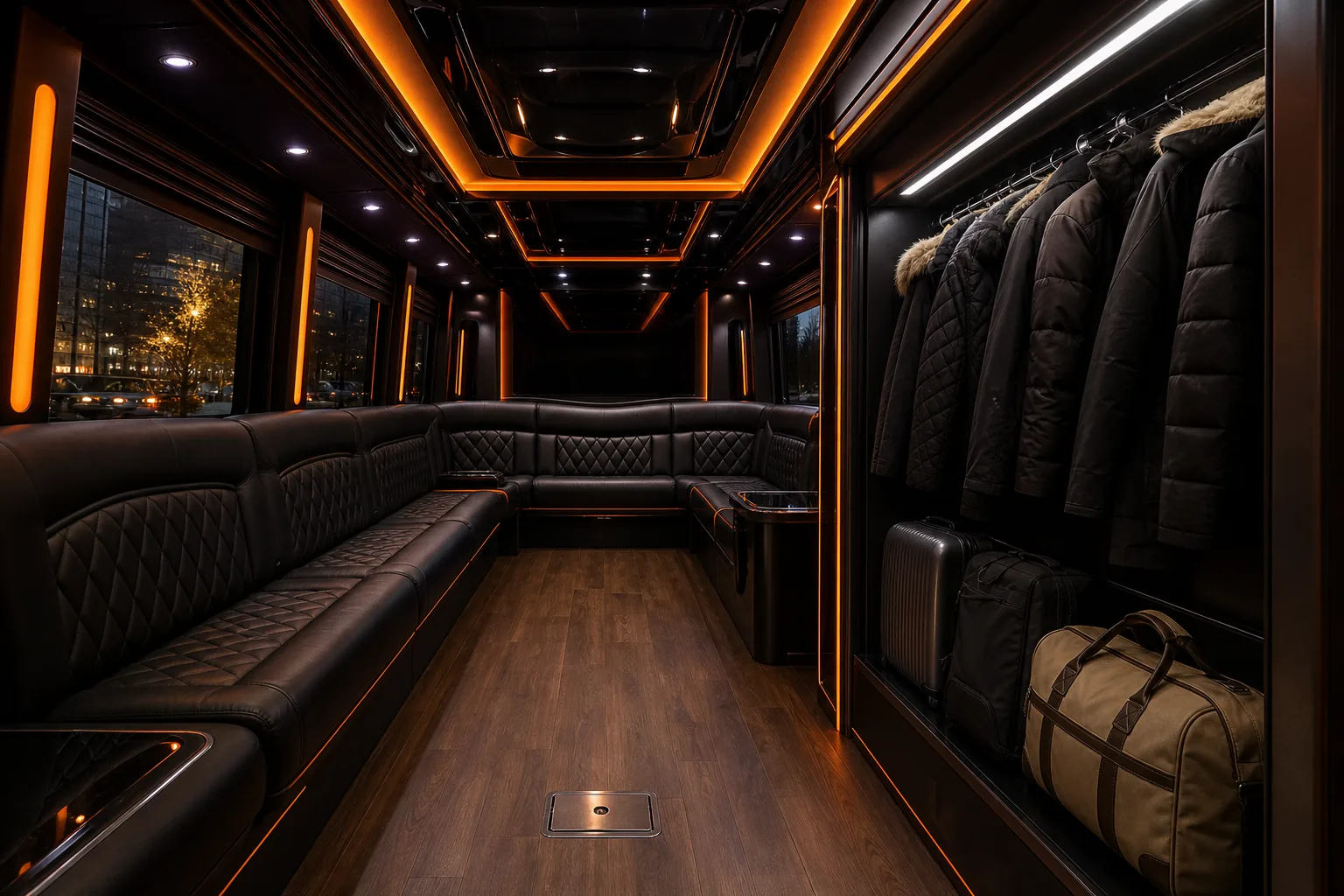
Accessibility needs a direct check. In the reviewed listings, wheelchair access was marked unknown wherever the field appeared. Don’t treat a standard bus photo as proof of access. Ask about a wheelchair lift, securement positions, boarding height, and transfer seating in the first request.
We also recommend separating party space from luggage space. A group flying into Minneapolis may need a mini bus with room for bags. A local birthday group may prefer a smaller lounge bus with less storage. Minneapolis Airport Car Service can help match group travel needs to a suitable chauffeured fleet when comfort and baggage handling matter more than a party-bus floor plan.
The decision rule is simple: choose based on the way people will spend time inside the vehicle, not only on the seat count.
Step 4: Confirm the Vehicle Before You Book
Before you book, confirm the exact vehicle, because a sample photo may show a different interior from the one assigned to your date. This final check prevents most capacity surprises.
Send the provider a complete trip brief. Include:
- The exact date and passenger count.
- Full pickup and drop-off addresses.
- Every planned stop.
- Estimated start and end times.
- Luggage, equipment, or mobility needs.
- The seating style and amenities your group expects.
A clear itinerary helps the provider match the route to the vehicle. A wedding shuttle with set hotel stops has different needs from a four-stop nightlife trip. A stadium transfer may require a specific loading zone and a firm arrival time. An airport trip may need flight monitoring and space for bags.
Ask for written confirmation of the following details:
- Vehicle type and exact passenger capacity.
- Number of seats in the rear passenger cabin.
- Interior layout and available floor space.
- Luggage storage location.
- Accessibility equipment and securement positions.
- Included amenities, such as Bluetooth audio or TVs.
- Minimum rental time and overtime terms.
- Taxes, service fees, fuel charges, and deposit rules.
Don’t rely on a vehicle name alone. A “30-passenger” listing can describe a lounge bus or a forward-facing shuttle. Those vehicles may carry the same rated number but feel very different during the ride.
Also check the price structure. The research data shows that aggregator listings can show higher hourly rates than comparable direct listings. That doesn’t mean one quote is wrong. It may reflect a different operator, date, fee structure, or service level. Compare the full trip total instead of comparing only the hourly number.
For corporate travel, a traditional party bus may not be the best tool. Minneapolis Airport Car Service focuses on airport transfers and corporate events with professional chauffeurs, real-time updates, and a fleet built around dependable group movement. If guests need to work, carry luggage, or arrive at a precise time, a luxury mini bus or executive vehicle may fit better.
We use the same care for families and private events. The goal is a smooth, safe, and enjoyable ride, with the vehicle matched to the actual plan. Our mini bus service for Minneapolis groups is a useful starting point when you need seats plus room for belongings.
Before paying a deposit, save the quote and the confirmed vehicle details. Keep the assigned capacity in your event file. If your guest count changes, report it early. A larger vehicle may be available, but no operator can promise an upgrade after the fleet is committed.
For safety planning, we also suggest reviewing the carrier’s insurance and operating details. Ask the provider for clear answers before your group boards.
That last step turns a rough capacity estimate into a booking you can trust.
FAQ
How many people fit in a party bus?
Most party buses fit about 14 to 50 passengers, while large charter-style vehicles can reach 56. The exact count depends on the vehicle and how the operator counts seats. For comfort, leave extra room when guests will stand, mingle, carry coats, or ride for several hours.
Is a 20-passenger party bus comfortable for 20 people?
A 20-passenger party bus can carry 20 seated riders, but it may feel full during a long event. A group of 15 to 18 usually has more room to move in that size. For 20 confirmed guests, compare a 25- or 30-passenger option before booking.
What is the biggest party bus size?
The largest vehicle in the reviewed Minneapolis listings holds 56 passengers. That vehicle is a charter bus rather than a classic lounge-style party bus. It suits large wedding groups, conferences, and stadium trips, especially when seats and luggage storage matter more than an open party floor.
Does party bus capacity include the driver?
Party bus capacity usually refers to passenger seats, but listings may count the front cab seats in different ways. Ask how many seats are in the rear cabin. That answer gives you a fair comparison and prevents a group from losing two usable passenger places to the front cab count.
How much extra space should I leave when booking?
For a long party, aim for roughly 10% to 20% more rated capacity than your confirmed count. That buffer helps with movement and personal items. A short transfer may not need as much space, while formal clothing, winter coats, or airport bags may call for even more.
Conclusion
For most Minneapolis groups, a vehicle with 10% to 20% more capacity than the confirmed headcount is the safest comfort choice. Confirm the rear seat count, layout, luggage space, and accessibility details before you pay a deposit. For airport transfers or corporate events, Minneapolis Airport Car Service can help you choose a chauffeured vehicle that keeps the trip smooth, safe, and on schedule. Send the full itinerary with your passenger count so we can point you toward the right fit.


